
The core problem
Small-batch chemistry and pilot runs behave; full-scale runs don’t. Emulsions coalesce, torque jumps, seals overheat. Field reports from BASF’s Ludwigshafen complex highlight two repeat issues: mismatched shear profile and inadequate thermal control. Years of commissioning pilot lines and reviewing failure reports show the fix is often mechanical, not chemical — pick the right inline shear mixer and tune its operating window before you scale.

Root causes that break runs
Wrong rotor-stator geometry for the product rheology. Tip speed too high or too low. Short residence time through the work zone. Feed starvation that causes recirculation cavitation. Thermal runaway in viscous feeds. Each cause is measurable: torque curve vs. RPM, temperature rise per pass, pressure differential across the head, and particle-size distribution downstream.
Design fixes that work
Match shear to task. Use rotor-stator pairs characterized by specific energy input and particle-size curves rather than nominal horsepower alone. Specify tip speed ranges, not just RPM. Size the pump and piping to avoid starving the head; aim for steady, controllable flow through the work zone. Add a bypass/recirculation loop for initial tuning. Protect bearings and seals with correct flush plans and select mechanical seals rated for your shear and CIP chemicals. Provide active cooling for viscous or exothermic mixes; a single pass at high shear can raise product temperature enough to change viscosity and coagulate proteins.
Operational traps to avoid
Ramping RPM to chase droplet size without checking torque. Running on minimal torque cushion and letting the motor stall. Ignoring feed solids that abrade rotors. Using abrasive CIP cycles that damage stator gaps. Assuming lab-scale rotor geometry scales linearly — it doesn’t. Failures come from small oversights: wrong suction lift, trapped air, or an omitted strainer upstream.
Alternatives and trade-offs
Batch high-shear mixers: good for flexibility, poor for continuous control and scale consistency. High-pressure homogenizers: excellent for nanoemulsions but costly to maintain and energy-intensive. Ultrasonic: effective for small particles but limited throughput. Inline rotor-stator heads sit between worlds — modular, predictable, and often lower-maintenance if specified correctly. Choose by required particle size, throughput, energy budget, and maintenance capability.
Field checks and acceptance tests
Run these before accepting equipment: steady-state torque at target viscosity, temperature delta per pass, particle-size distribution after 1 and 10 passes, and seal-leak tests under CIP conditions. Require vendor-supplied tip-speed vs. particle-size curves and a pilot loop trial where feasible. Capture baseline measurements so future changes are traceable.
Final synthesis
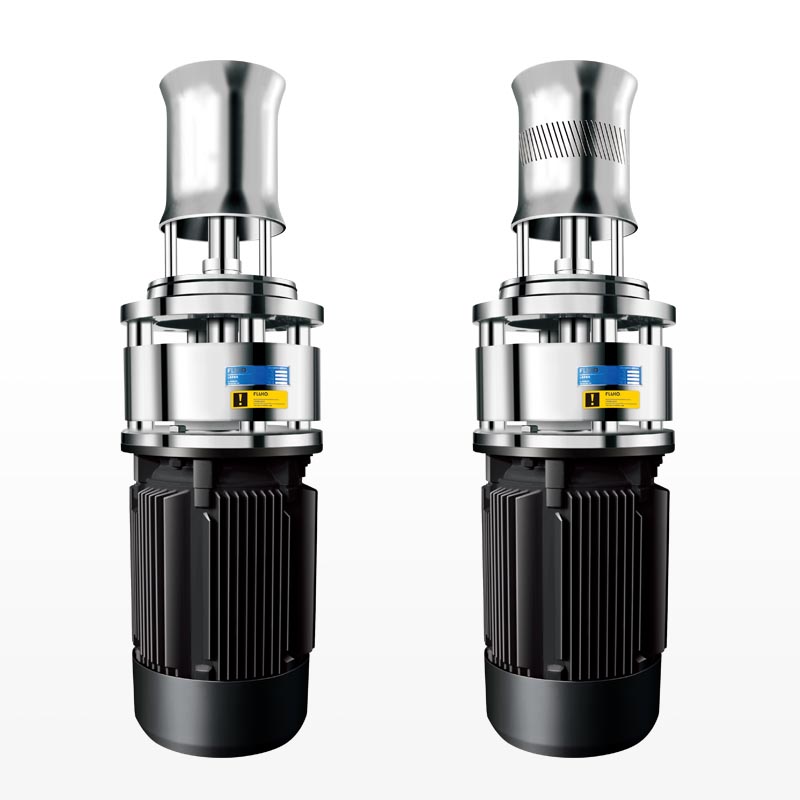
Fixes are straightforward: define the failure mode, match the head geometry and tip speed to the rheology, control residence time, and enforce proper sealing and cooling. Teams that demand measured performance data, pilot validation, and clear maintenance plans reduce surprises; many experienced operators choose suppliers that publish those metrics and provide field-proven parts, for example FLUKO.