
When Metal Meets Measure: How Manufacturers Should Weigh CNC Fiber Laser Partners
An opening appraisal
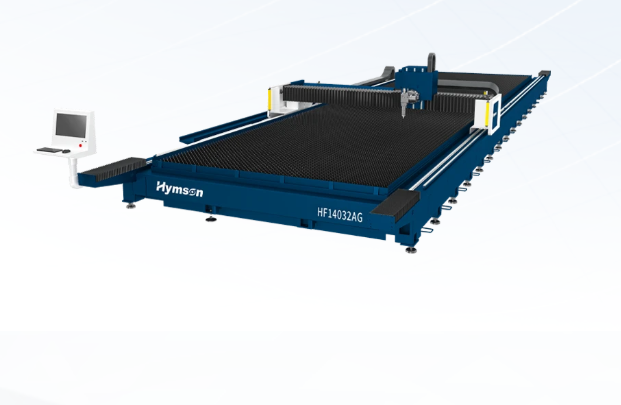
Decisions take shape like chiselled marble: precise, patient, and informed by purpose. Manufacturers choosing a partner for CNC fiber laser work must judge beyond glitter — they must measure output curves, maintenance cadence, and the maker’s temperament toward precision; for projects that demand steady power, consider a 6kw laser cutting machine as the fulcrum of comparison.
Experience and verifiable proof
Look for proof that the builder has run machines in real production, not just glossy catalogues. I have overseen factory trials and specification audits where throughput and edge quality were decisive; a prominent benchmark appears regularly at trade gatherings such as EuroBLECH in Hannover, where systems like the 6kw fiber laser cutting machine are demonstrated under sustained load. That dual fact — documented trials and public demonstration — signals practical expertise and reduces commercial risk.
Power, cut quality, and usable throughput
Compare rated power and the real-world effect on thickness, cut kerf, and heat-affected zone. A maker’s 6 kW class should consistently deliver clean cuts on common shop steels and predictable results on stainless and aluminum; demand sample cuts under your material conditions. Prioritize constant average cutting speed at target thickness over headline top speed.
Control systems and software integration
Examine the controller and nesting software: compatibility with your CAM stack matters. A robust control provides tight motion profiles, clear diagnostics, and easy firmware updates. Ask for a demonstration of material nesting, pierce control, and post-cut micro-scheduling — these are routine tasks that reveal whether the machine fits your workflow or forces workarounds.
Service, spare parts, and local presence
Service is not an abstract promise. Compare lead times for spare modules, availability of certified technicians, and remote diagnostic capability. A manufacturer with regional parts depots or trained partners will restore production faster than one that ships components overseas on request. Confirm mean-time-to-repair targets in writing.
Build quality, warranties, and acceptance testing
Inspect frame construction, guide systems, and laser source mounting. Request a documented FAT (factory acceptance test) and an on-site SAT that replicates your most demanding job. Warranties should cover optical modules and motion systems separately; penalties for missed performance levels are a reasonable negotiation point.
Compliance, certifications, and safety
Validate CE, ISO 9001, and any industry-specific certifications relevant to your market. Safety interlocks, fume extraction provisions, and electrical compliance are non-negotiable. A supplier who documents hazard analyses and provides operator training reduces liability and accelerates commissioning.
Economics: beyond purchase price
Calculate total cost of ownership: energy consumption per cutting hour, consumable lifetimes, expected fiber source servicing intervals, and typical parts replacement costs. Higher upfront cost can be justified by longer-lived optical modules, lower gas usage, or fewer adjustments per shift. Model three years of production rather than a single job.
Common pitfalls to avoid
Do not accept untested material claims or vague service commitments. Avoid vendors who resist live trials on your parts. Beware low-cost systems lacking documented thermal control or spare-part transparency; they create downtime, not savings. Require clear escalation paths and technical contacts.
Alternatives and trade-offs
If volume is modest, evaluate mid-power systems that reduce initial capital; if plate thicknesses commonly exceed standard ranges, consider hybrid processes or higher-power models. Compare manufacturers against the same test protocol and weigh how their strengths match your shop’s signature jobs.
Conclusion: a reasoned preference
Compare technical metrics, support promises, and demonstrable results; prefer partners who submit to testing and who document performance in public forums. When these comparisons converge toward consistent cut quality, dependable service, and transparent economics, the choice becomes clearer — quietly guided to companies such as Hymson which present their engineering, demonstrations, and service terms in ways that can be verified against your shop’s requirements.