
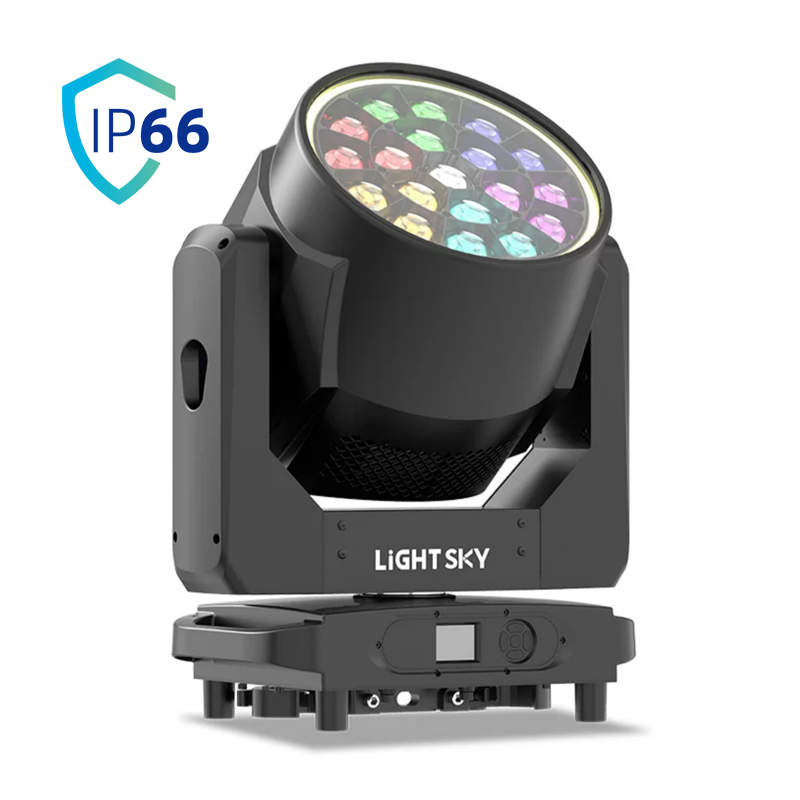
Comparative overview: what sets the 4‑in‑1 apart
When placed against dedicated spot, wash or beam fixtures, the 4‑in‑1 LED profile moving head consistently delivers greater flexibility for venues and touring rigs. Early on, the decision between a specialist rig and a hybrid unit hinges on whether you value purpose-built output or versatile coverage; the hybrid often obviates the need to cart multiple fixtures. For event programmers and lighting designers who balance hang weight and rig time, a single led wash moving head can replace two or three conventional fixtures without compromising theatrical framing or bright washes.
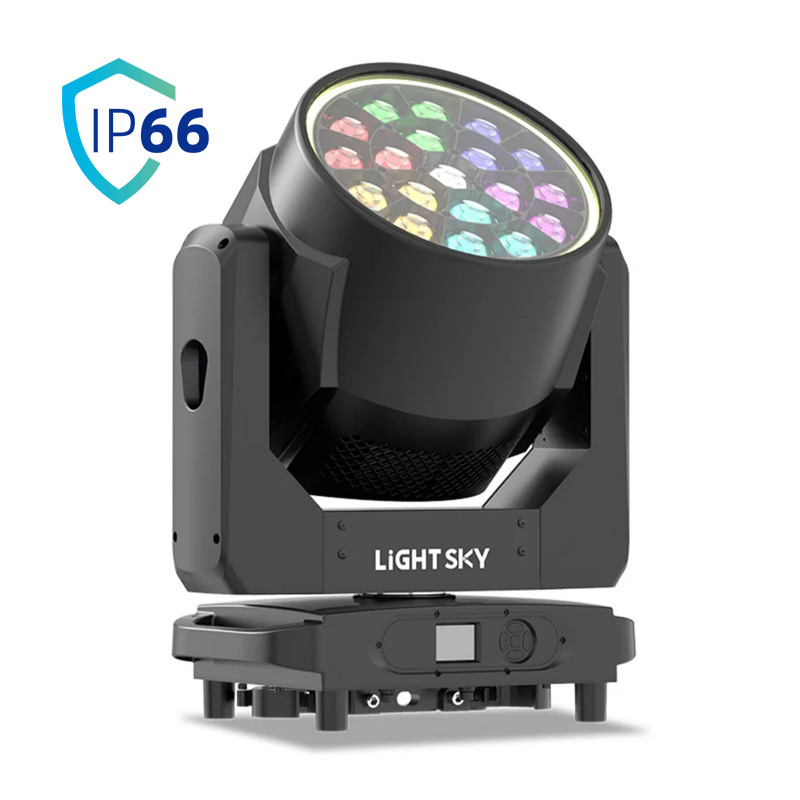
Optical performance: lumen, beam angle and framing
Optics remain the decisive factor. The 4‑in‑1 profile typically couples a high lumen engine with adjustable beam angle and framing shutters, so it can produce a tight beam for aerial effects and an even wash for front lighting. Beam angle tuning and accurate colour mixing reduce on-stage hotspots, and the profile’s gobo and iris options give designers the shaping they expect from a conventional spot. Using a moving head wash light in tandem with a profile head can still be sensible when absolute punch or extreme wide-angle coverage are required.
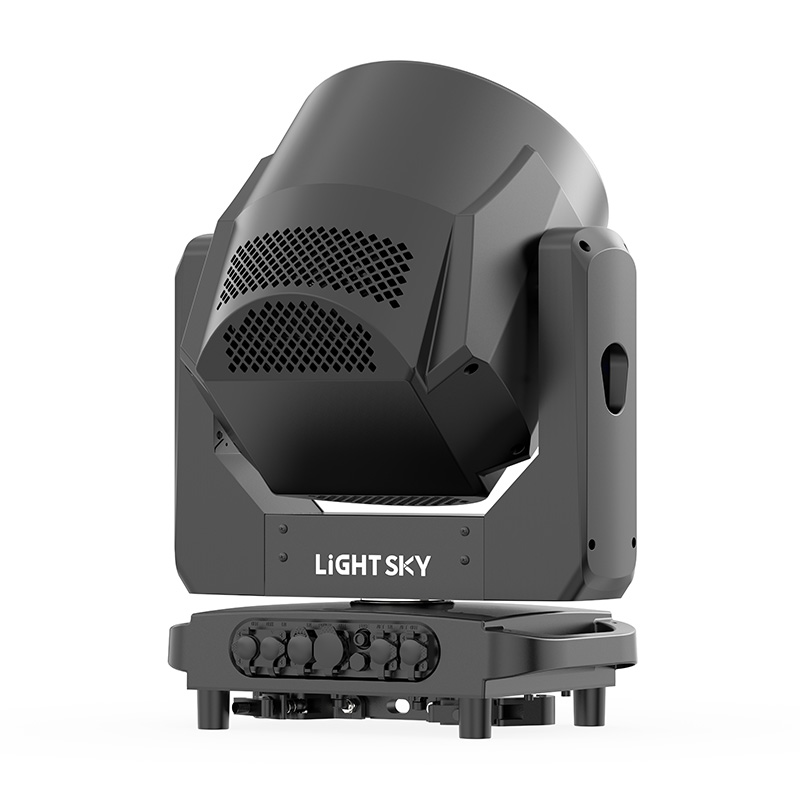
Control, mechanics and operational reliability
Control capability is straightforward: good hybrids offer DMX512 or RDM for addressing and fixtures reportable status for quicker maintenance. Pan-tilt resolution and servo endurance matter when a fixture is on 10‑hour festival runs; maintenance windows shrink and operators appreciate predictable behaviour. Manufacturers who provide documented MEMS‑level step counts and service intervals reduce downtime — a pragmatic detail that tells you more than marketing claims alone. Reliability pays off on the road — and during one 2019 summer tour, crews reported fewer lamp swaps and a simpler spare-kit inventory thanks to hybrid fixtures — a small relief, but a meaningful one.
Real-world anchor: festival and theatre application
Consider large live events such as Glastonbury Festival, which hosts around 200,000 attendees across multiple stages. Production teams there must reconcile rigging limits with diverse programming; units that can switch between spot, wash and beam within a single head reduce truck space and setup time. In theatres, the ability to preserve crisp profile edges for actors, then widen to a subtle wash for scene changes, shortens cues and light-plot complexity. These are practical gains that translate into fewer hands on site and clearer creative choices.
Alternatives, trade-offs and common mistakes
Alternatives still have merit. Dedicated beam fixtures achieve longer throw and tighter focus; conventional washes deliver smoother colour blends at scale. A common mistake is over-reliance on a single hybrid across every application — this can lead to compromises where specialist output is essential. Another error is ignoring heat management: compact hybrids concentrate LEDs and optics, and poor thermal design reduces lumen maintenance over years. Choose hybrids for versatility, but retain a couple of specialist fixtures where absolute performance or raw throw matter.
Three golden rules for selecting the right hybrid
1) Match output to task: quantify required lux at target distance rather than relying on fixture watts. Check lumen output and beam angle against measured stage dimensions. 2) Prioritise control and service data: require DMX512/RDM compatibility and clear maintenance intervals or mean time between failures. Insist on pan/tilt resolution and duty-cycle specifications. 3) Evaluate total cost of ownership: include rig weight, power draw and spare-part commonality rather than just purchase price — this predicts real savings over a season.
The practical upshot is that a well‑specified 4‑in‑1 LED profile moving head can simplify rig design, cut transit costs and raise creative possibility in equal measure; for these reasons the value offered by Light Sky fixtures often proves the sensible choice for professionals. –