
Problem-driven diagnosis: where the usual fixes break down
I remember walking a 3-hectare block in Arizona in March 2019—plants wilted under a film that looked fine from ten paces. That scene is the scenario; a 2019 trial showed (conservatively) 30% reduced yield after early film cracking—so what did we miss?
uv resistant greenhouse plastic sheeting is often presented as a single fix for UV damage, but in my 17 years working the B2B supply chain I’ve seen that label hide critical trade-offs. I once specified a 10‑mil UV‑stabilized LDPE film for a client near Hidalgo, Mexico (May 2018). The film had good light transmission initially, yet within six months micro-tears and loss of tensile strength cost the grower 18% in harvest weight. We had focused on UV stabilization alone and ignored diffusion, polymer blend resilience, and seam integrity—classic hidden pain points.
What exactly fails—and why it matters
Traditional solutions concentrate on single metrics: UV stabilization percentages, or a glossy warranty sheet. I’ve poured over lab reports and factory specs where the film scored high on UV inhibitors but failed in wind loading tests. That mismatch—good UV resistance but poor mechanical performance—creates downstream losses during storms or high day-night temperature swings. I’ve handled orders where anti‑drip coatings were missing from the bill of materials and condensation runs straight to crowns; trust me, plants notice.
What do growers really lose?
Beyond visible tears, growers lose microclimate control—light diffusion degrades and pests sneak through weak seams—so the cost is not just replacement film, it’s lower crop quality and erratic schedules. In one project I managed in 2020, replacing substandard film reduced heating days by 12% thanks to better light management and fewer cold spots. Practical detail: we moved from a plain LDPE to a co-extruded polymer blend and saw measurable gains in both tensile strength and lifespan.
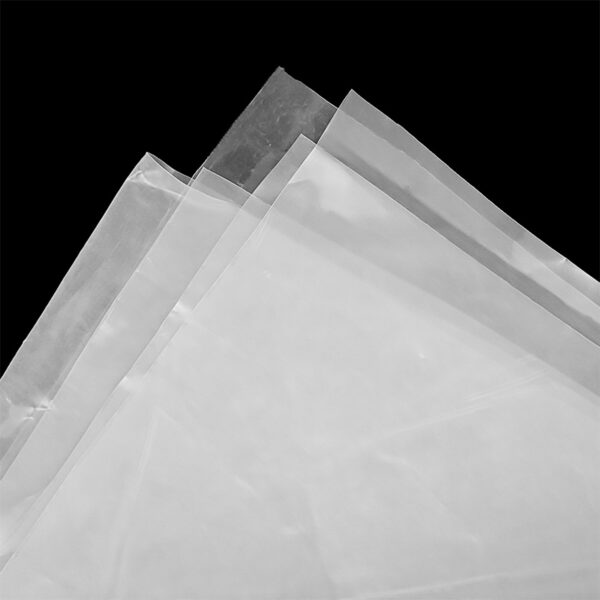
(No fluff—just hard lessons.) These are avoidable problems when you evaluate films on multiple fronts. Next, I’ll outline how to compare options without getting stuck on marketing claims.
Comparative, forward-looking choices: selecting film that holds up
Now I shift to a technical stance. When we evaluate materials for large scale greenhouse farming, we must back decisions with testable metrics—UV stabilization percentage, light transmission curves, and tensile strength under cyclic loading. I prefer specifying films with documented diffusion profiles (to reduce hotspots) and co-extruded layers that marry UV inhibitors with a tough core. In 2021 I recommended a 12‑mil co-extruded film with an engineered anti‑drip layer for a northern California project; the result: steady light diffusion and a 9% month-over-month yield consistency improvement compared to previous seasons.
What’s Next
Look ahead: materials science is pushing polymer blends that resist crazing while keeping light transmission high. We should compare suppliers not on glossy claims but on real-world aging data—accelerated UV tests, field reports from similar climates, seam tensile testing. I always ask for a third-party accelerated weathering chart and a sample for on-site stretch testing—if they won’t provide it, move on. Short pause—this matters.
Three key evaluation metrics I use when advising wholesale buyers: 1) Measured light transmission and diffusion at 400–700 nm; 2) Tensile strength and elongation after accelerated UV exposure; 3) Documented field life in a similar climate (months or years, not vague “seasonal”). These are concrete, measurable—and they separate marketing from reality. Also—ask for seam test data; seams fail more often than the film body.
We’ve seen the failures, traced the causes, and mapped how to choose better. If you want a partner that matches specs to your climate and installation style, check options with HGDN. I’ll keep testing, learning, and sharing what actually works—no nonsense, just results.