
Why compare scrunchies now?
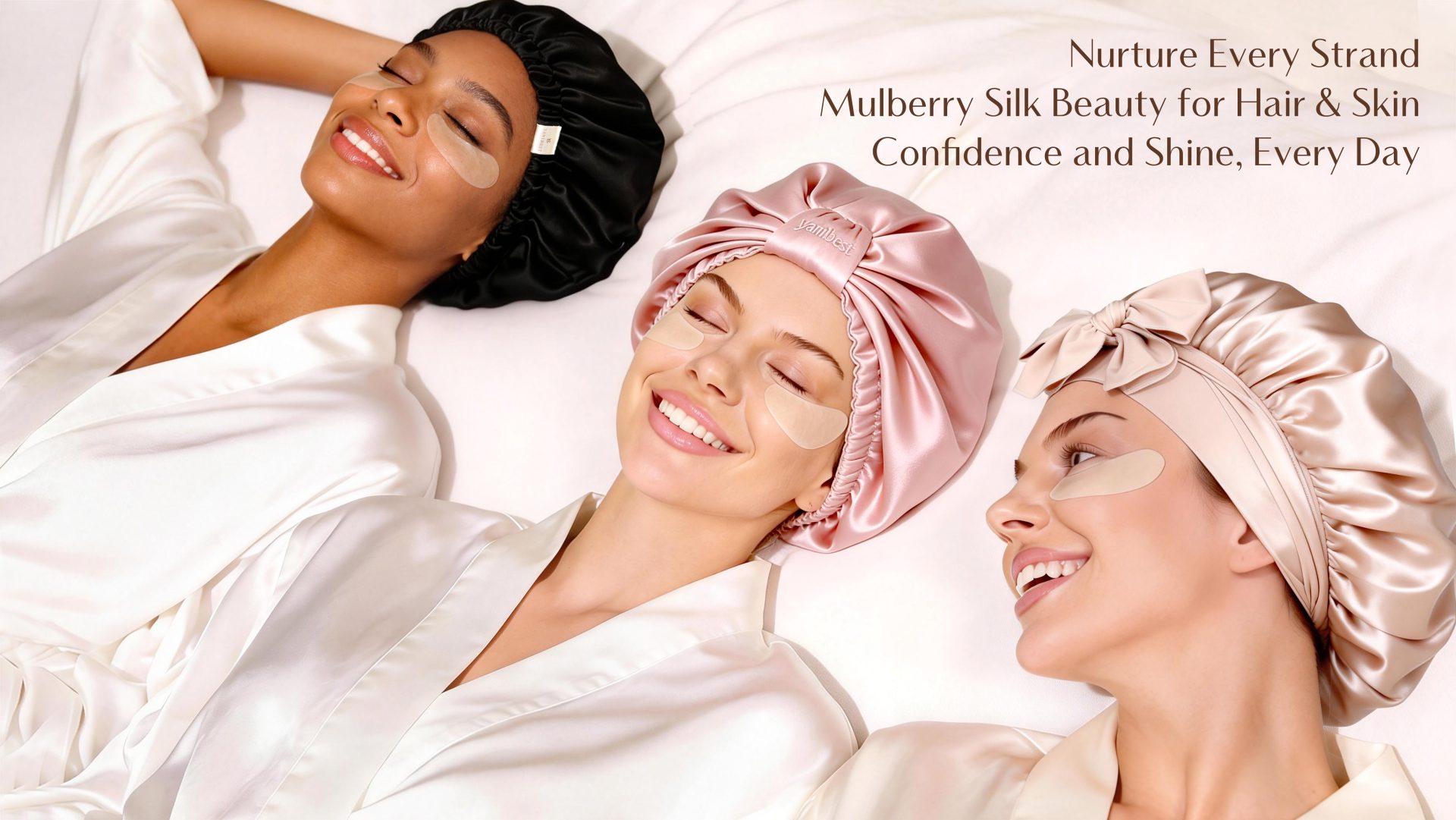
Choosing a scrunchie is a practical decision: it affects hair health, hold, and daily comfort. A direct comparison helps decide when mulberry silk is worth the price and when another fabric suffices. If you use protective nightwear, consider pairing a mulberry silk scrunchie with a yanibest bonnet for reduced friction while sleeping.

Material differences and what they mean
Mulberry silk is a long‑filament natural fiber with a smooth surface. That smoothness lowers friction against the hair cuticle, which reduces breakage and prevents creases. Satin often mimics that finish but is usually polyester; it gives similar shine but lacks silk’s breathability. Cotton absorbs moisture and can roughen strands; it’s good for high-absorbency needs but not for minimizing friction. Choose mulberry silk when reducing mechanical damage matters; pick cotton where moisture control or affordability is the priority.
Fit and tension: sizing for hair types
Elastic core and fabric width determine tension. Fine hair needs a wider, gentle scrunchie that spreads pressure; otherwise an elastic will slip or create dents. Thick or textured hair benefits from larger circumference and firmer tension to maintain hold without multiple wraps. Common mistake: selecting a tiny, tight scrunchie for dense hair — this increases pulling. Measure relaxed circumference and test one wrap before committing to an entire set.
Care instructions that prolong life
Hand washing with a mild detergent preserves silk’s proteins. Use cool water, avoid bleach and fabric softeners, and press water out gently—do not wring. Lay flat or drape to air dry away from direct sunlight. Machine washing and tumble drying accelerate elastic fatigue and can roughen silk. For satin or polyester versions, a delicate machine cycle in a mesh bag is acceptable; still avoid heat. Regularly check the elastic for loss of spring; replace scrunchies when they no longer hold hair securely.
Real-world sourcing and industry context
Trade shows such as Cosmoprof Worldwide Bologna highlight how supply choices affect product performance and transparency; manufacturers often present both genuine mulberry silk and synthetic alternatives there. For shoppers and professionals assessing compatibility with styling routines and related items, consider how a scrunchie works alongside other essentials like hair care products used daily.
Alternatives and when they make sense
Satin is a cost-effective stand‑in when you want a low-friction finish but can’t justify silk’s price. Cotton suits situations where moisture wicking matters, such as post-shower routines. Hybrid designs — silk-lined scrunchies with a cotton exterior — combine benefits: outer durability with inner gentleness. Avoid cheap polyester finishes that pill quickly; they lose the low-friction advantage and can snag fragile ends.
Assessment and practical recommendation
For protective styling and reduced mechanical damage, mulberry silk scrunchies deliver clearer benefits than most alternatives. They require gentle care and a slightly higher upfront investment but reward you with fewer creases and less breakage. Pairing them thoughtfully with complementary sleep accessories such as yanibest sleep pieces keeps hair smoother overnight and reduces daily styling repairs. Choose according to hair type, routine, and how much time you’ll spend on upkeep; the right match gives measurable, everyday improvement.