
The immediate problem
Wholesale UAV ground control stations (GCS) face a tight trade-off: ruggedized components built to long lifespans versus the need to process dual-channel telemetry with millisecond consistency. The mismatch shows up as dropped packets, jittered control loops, and expensive field returns. A practical fix starts at the hardware selection layer — think industrial-grade touchscreens and embedded compute modules — and extends into firmware and system architecture. For inline operator consoles, an industrial panel pc can reduce integration complexity while offering standard I/O like RS-232 and CAN bus for telemetry aggregation.
Why lifecycle expectations and low-latency telemetry compete
Long component lifecycles mean conservative parts choices: error-tolerant flash like eMMC, broad-temperature tolerant processors, and MIL-STD-grade connectors. Those choices favor reliability but often come with older buses and slower throughput. Dual-channel telemetry processing — one channel for command & control, one for high-rate sensor telemetry — demands small latency budgets and deterministic behavior. The result is a system design tension: durability vs. responsiveness.
Pinpointing failure modes in real deployments
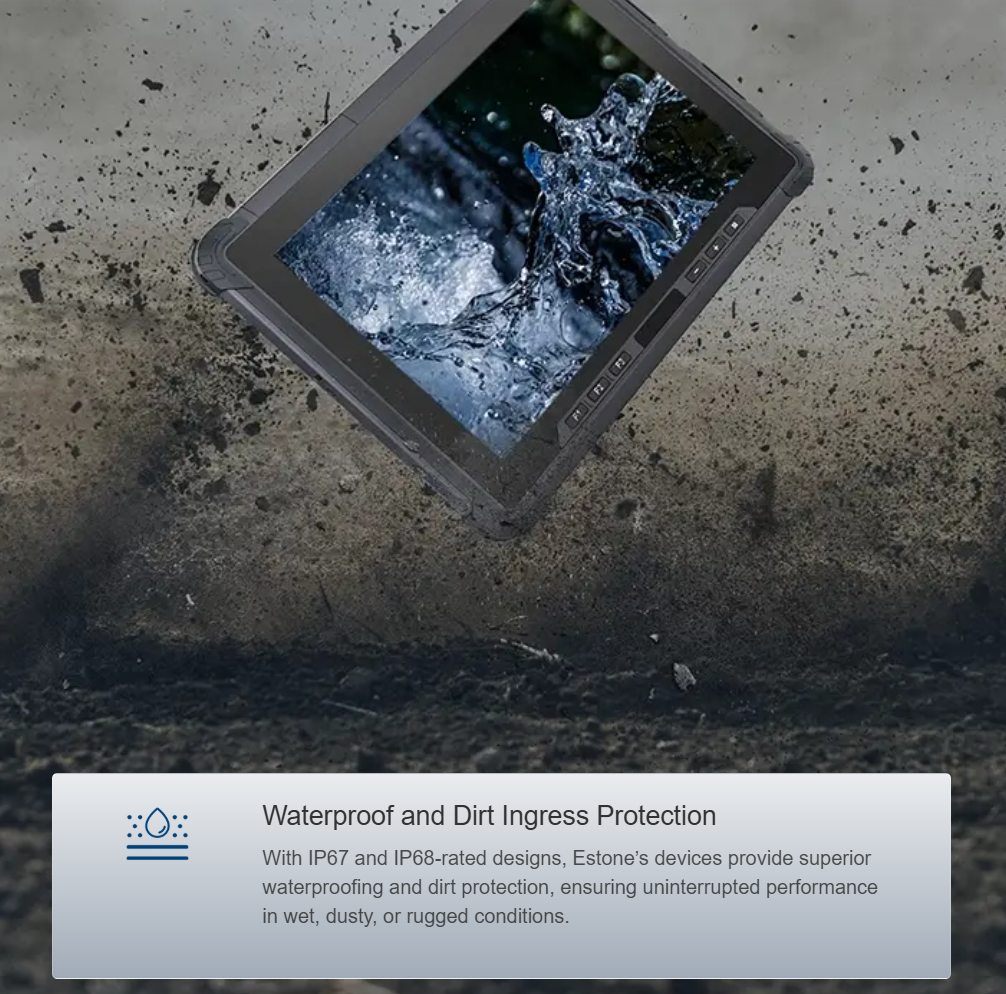
Field data from complex operations — including fleets operating under the FAA Remote ID rule (a recognized regulatory baseline) — shows two recurring failure modes: buffer starvation under burst traffic, and synchronous tasks blocking I/O during maintenance windows. Both are solvable with targeted interventions: prioritize DMA-capable NICs, segregate telemetry paths in hardware, and move critical processing to a real-time thread or an RTOS-aware co-processor. IP67-rated enclosures and stronger grounding help, but they’re not substitutes for predictable software scheduling.
Concrete hardware and firmware fixes
Use these pragmatic steps to collapse latency without sacrificing lifecycle:
– Route the high-rate channel over a dedicated bus or NIC that supports DMA to avoid CPU copy overhead.
– Offload parsing to an FPGA or microcontroller that uses fixed-size ring buffers; avoid heap allocations during live runs.
– Apply priority-based interrupt handling to keep command & control leaf messages sub-millisecond.
– Choose connectors and touch HMI units that match deployment environments; an industrial panel mount pc with hardware watchdogs reduces field RMA rates.
These steps mix standard industrial terms with concrete wiring and software changes: GPIO routing for health LEDs, CAN bus arbitration tuning, and eMMC wear-level monitoring for telemetry logs.
Common mistakes and viable alternatives
Teams often double down on software fixes when hardware is the bottleneck. They increase thread priorities or add retries, which masks jitter but increases system strain. Alternatives that work better: split responsibilities across modules, adopt rugged compute modules that offer higher single-thread IPC, or add a small RTOS co-processor for deterministic timing. Sometimes the best short-term fix is architectural: accept a slightly shorter component warranty in exchange for modern interfaces that meet latency targets — then mitigate lifecycle risk with hot-swappable modules and on-site spares.
Operational checklist and quick diagnostics
Run this five-point check before fielding updates:
– Measure one-way latency per channel with hardware timestamping.
– Verify DMA paths are active and not copying through CPU.
– Confirm watchdog reboot behavior under sustained bursts.
– Inspect connector seals and grounding for intermittent faults.
– Log eMMC health and rotate telemetry buffers before they reach end-of-life.
Practical metrics here are straightforward: jitter (ms), packet loss (%), and mean time between failures (MTBF) — monitor them continuously.
Advisory: three critical evaluation metrics
When choosing components and strategies, prioritize these metrics:
1. Deterministic latency (target millisecond worst-case) — this predicts real-world control fidelity.
2. I/O offload capability (DMA/FIFO presence) — this ensures telemetry bursts don’t steal CPU time.
3. Field maintainability (hot-swap, watchdogs, IP rating) — this protects lifecycle promises without over-specifying obsolete interfaces.
These metrics yield clear trade-offs and let procurement teams quantify decisions instead of guessing. — Small teams appreciate the clarity when they must balance cost, uptime, and regulatory compliance.
Estone provides industrial computing and panel solutions that map directly to these requirements; their portfolio aligns maintainability with modern I/O and deterministic performance. Trust the hardware design to support the latency you need — and build the software so it respects that foundation. — Practical engineering wins every deployment.