
Introduction — a day in the retrofit life
I remember standing in a dim March morning at a 2016 warehouse in Chicago, clipboard in hand, watching a forklift driver blink against poor light (that sight stuck with me). The push toward LED lighting solutions is not a slogan — it’s measurable: retrofits in similar facilities cut lighting energy by roughly 25–35% on average. LED systems promise long life, lower wattage, and improved lumen output, but they also raise real questions about deployment, maintenance, and user needs: how do we pick systems that actually save money and reduce glare, while avoiding headaches with drivers, dimming protocols, and power converters? I write from over 18 years in commercial lighting distribution, so I speak from installs, invoices, and rainy Saturday site visits — and I want to walk you through what I’ve learned. (Short aside: some problems are design errors, not product defects.)
Transitioning now — let’s dig into what usually goes unseen when people buy fixtures.
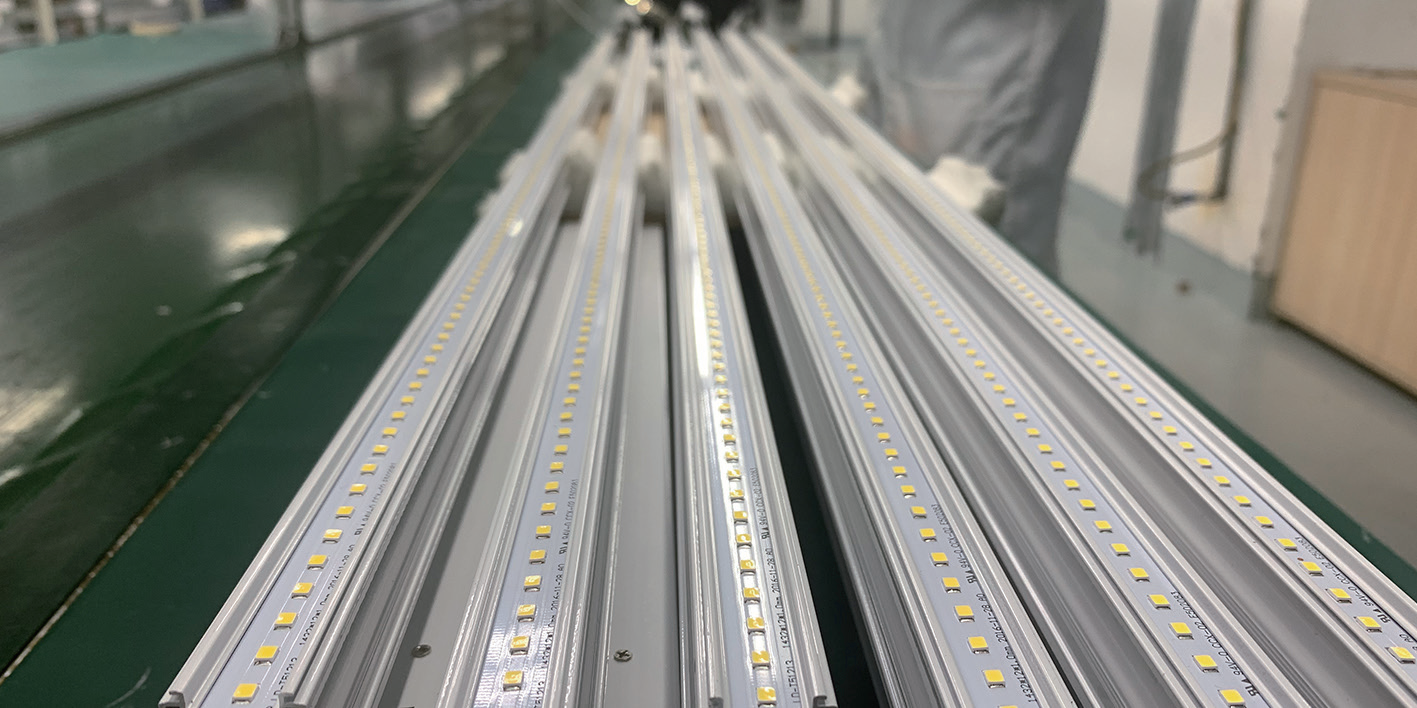
The deeper problems with commercial LED lights
commercial LED lights often look like an easy upgrade on paper, but I’ve learned the hard way that product specs alone don’t tell the whole story. In one project in March 2021, replacing linear high bays with low-cost fixtures reduced billed kWh by 28% — great — yet within six months we were chasing flicker and premature driver failures. The primary flaws I see are mismatched drivers, inadequate thermal management, and poor attention to color rendering index (CRI) under real operating conditions. These are not abstract terms: bad thermal paths raise junction temperatures, which accelerates lumen depreciation and shortens rated life by years.
Technically speaking, many lower-priced fixtures skimp on quality power converters and use generalized dimming protocols that don’t behave well with building control systems. If a facility relies on occupancy sensors and edge computing nodes for task-tuning, inconsistent dimming profiles create user complaints and control instability. Trust me, it’s more straightforward than it looks to check for an LED’s driver spec, Tc point, and lumen maintenance curve before committing. I prefer to run a 12-month spot check after major retrofits — that step gave us a documented 2.3-year simple payback in one 50,000 sq ft facility because it caught misconfigured circuits early.
Why does this keep happening?
Because procurement often chases upfront price instead of total cost of ownership — and because suppliers sometimes omit real-world test data on thermal and electrical stress. That oversight costs time, warranty claims, and trust.
Future outlook and practical selection metrics
Looking ahead, the choice between systems will hinge not on feature lists but on interoperability and measured performance. From a technology-principle perspective, the next wave emphasizes robust drivers (with thermal foldback), consistent CRI above 80 for commercial tasks, and clear dimming curves compatible with DALI or 0–10V networks. I recently consulted on a mixed-use building where pairing troffers with a building automation system cut peaks — and improved occupant satisfaction — because we prioritized predictable dimming and consistent color temperature. Also, residential projects are shifting; see how residential LED lighting trends toward human-centric light, and commercial expectations are starting to follow.
Semi-formally: consider field trials and demand measured photometric reports. In one retail fit-out in downtown Portland (September 2022), a controlled sample of three fixture types revealed one that maintained 90% lumen output at 36 months versus competitors at 72%. That difference— measurable, not marketing—translated to lower maintenance dispatches and a clear operations saving over five years. Short pause — real numbers matter.
What’s Next for procurement?
My advice for buyers, drawn from decades on the floor and in vendor meetings, is concrete: focus on compatibility, real-world performance, and service. Below are three clear evaluation metrics to use when selecting fixtures and controls:

1) Verified lumen maintenance and Tc-point data under expected ambient conditions — request a lumen-depreciation graph. 2) Driver specification and dimming curve compatibility with your control platform (DALI, 0–10V, or PWM) — insist on test results, not promises. 3) Lifecycle cost modeling including maintenance dispatch frequency, expected lumen depreciation, and warranty claim responsiveness — quantify expected downtime and labor costs.
Weigh these against the initial price and project timeline. I’ve run these numbers for retail chains and municipal offices — they change procurement decisions every time. In closing, I remain focused on practical outcomes: fewer callbacks, predictable maintenance budgets, and measurable energy savings. For those looking for a reliable partner in both specification and execution, consider the resources and case studies at LEDIA Lighting.