
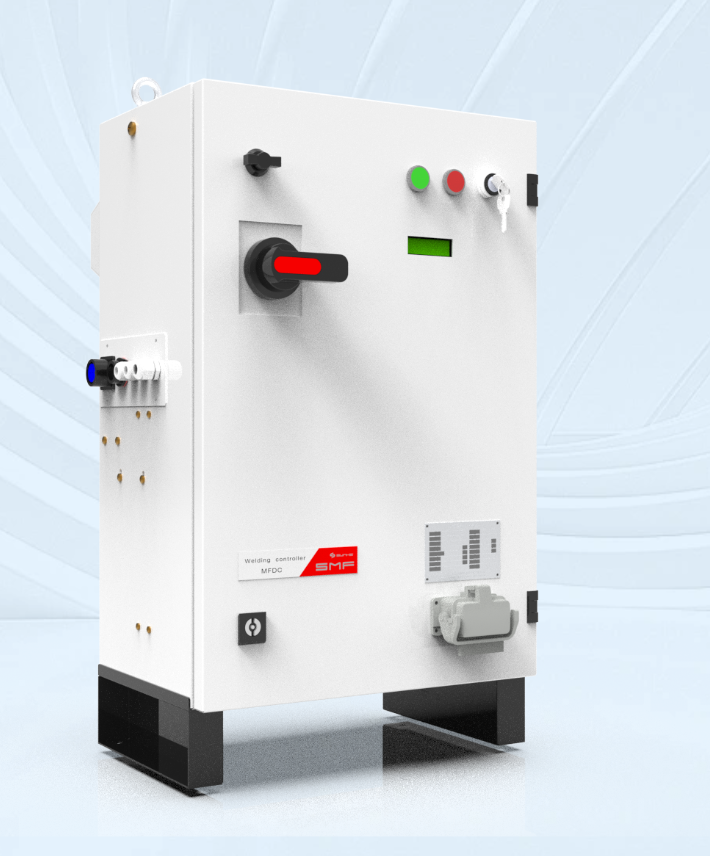
Clear comparative lead — what this guide does
If your line makes many small joints per minute, or you need joints with consistent electrical contact, comparing resistance welding and broader industrial welding approaches is practical and necessary. This piece uses direct trade-off thinking to help you choose between scalable resistance welding solutions and more flexible arc or laser approaches; it also points to where resistance welding systems deliver measurable value. The comparison relies on shop-floor realities and applied judgement rather than marketing claims.
How the comparison works
Comparative insight asks one simple question: what does your production line actually need day-to-day? Consider throughput, part geometry, material stack-up, required joint strength, and lifecycle maintenance. I base recommendations on hands-on problem solving and audits at fabricators, plus knowledge of typical automotive assembly needs—notably practices used around Detroit’s automotive assembly lines—so the suggestions match what engineers actually face.
Technical differences that decide outcomes
Look at these concrete differences before committing:
– Heat source: Resistance welding uses electrical current and contact pressure; arc, TIG, MIG, and laser create a localized arc or beam. – Joint types: Resistance best for lap joints, spot, projection, seam; industrial welding covers fillets, butt joints, exotic welds. – Cycle time: Resistance often faster for repetitive spot joints; some arc/laser processes take longer per part but handle complex joints. – Distortion and heat-affected zone: Resistance tends to confine heat; arc processes create larger HAZ and may require distortion control. – Automation fit: Resistance welding integrates naturally into high-volume automation; laser and robotic arc systems are flexible but need more programming and sensing. – Consumables and maintenance: Resistance machines need electrode maintenance and consistent tooling; arc systems need wire, shielding, and qualified operators.
When resistance welding is the right choice
Choose resistance welding when you need:
– High-cycle spot joining of sheet metals (automotive panels, battery tabs). – Low overall heat input to protect coatings or nearby components. – Simple, repeatable joints suitable for fixed tooling. – Minimal post-weld cleaning and fast in-line integration.
Watch for these pitfalls: poor electrode force control, inconsistent part fit-up, and ignoring electrode wear schedules. Each causes bad joints even with a capable system.
When industrial welding methods win
Pick arc, TIG, MIG, or laser welding when you require:
– Strong seam or butt joints in thicker sections. – Welding of dissimilar metals or complex geometries. – High single-joint strength where penetration matters. – Flexibility to change product types frequently without full tooling swaps.
Common mistakes here include underspecified fixturing, inadequate fume extraction, and assuming cycle times will match resistance spot rates.
Practical trade-offs and ROI considerations
Decisions come down to measurable variables: parts per hour, rework rate, electrode or consumable cost, and operator skill availability. A quick rule: if one joint type repeats thousands of times and fits a simple electrode, resistance welding often pays back faster. If part variants change weekly or you need thicker single joints, industrial welding methods usually give better long-term value.
Common implementation errors and fixes
Address these early to avoid lost production:
– Bad fixturing: design for repeatable clamping; tolerance stack-up kills consistency. – Skipping pilot runs: run small-volume trials under full-cycle conditions. – Ignoring data: track weld current, force, and time; use that data to catch drift. – Underestimating maintenance: schedule electrode dressing and calibration.
Quick vendor and integration notes
Evaluate suppliers on these points: quality of tooling support, availability of spares, on-site training, and data-access for process control. Compare total cost over expected production life rather than capital price alone. If your line will expand automation later, confirm control interfaces and robot compatibility before purchase.
Final synthesis
Your choice reduces to repeatability versus flexibility. For high-volume, repeatable electro-mechanical joints, resistance welding most often delivers the predictable cycle times and low post-processing you need; for thicker materials, varied joints, or frequent product changes, industrial arc or laser welding is the pragmatic route. Practical experience, measured trials, and sound maintenance plans will tell you which path stabilises production fastest, and for many shops that balance is what Sunke helps achieve through matched systems and shop-level know-how.