
Introduction
Define the form, then read the facts. The marquise cut is an elongated brilliant with pointed termini, optimized to spread light across a lean silhouette. Classic jewelry pieces—solitaire rings, halo pendants, heirloom bracelets—often rely on this profile for elegant finger coverage and period charm. Today, buyers search for a marquise shape diamond that balances sparkle with stability, and they do so under stricter requirements for disclosure and performance. Retail trackers show steady growth in elongated cuts over the last few years, driven by stackable styles and custom CAD work; yet the same growth raises questions about proportion and wear. How do you weigh light return against chip risk at the tips, or face-up size against depth percentage (and under different lighting)? The issue is not only taste—it is a compliance and durability problem as well. In practice, clarity, girdle thickness, and facet symmetry must align with setting engineering. Let’s examine why the usual approach breaks down, then compare what actually works in the field—step by step.

The Quiet Frictions Behind the Marquise’s Glow
Where do classic methods fall short?
Here is the blunt reality. Legacy buying rules—“pick the biggest face-up and call it a day”—ignore how the marquise manages light and stress. A shallow pavilion depth can push spread, but it also boosts light leakage and the bow-tie. Excessive table percentage flattens fire. Thin girdles at the points raise chip risk during prong setting and routine wear. Even when a report reads Excellent polish and Very Good symmetry, crown angle drift can amplify the bow-tie under office LEDs. Look, it’s simpler than you think: the cut geometry governs both performance and longevity, and shortcuts show up fast—funny how that works, right?
User pain points hide in plain sight. The stone looks big in photos, then under 400–600 lux it dims at center. V-prongs feel secure, yet misaligned prong seats can torque the tips. Micro-abrasions on a Very Thin girdle expand over time, especially if the ring rides high. Fluorescence can be helpful in daylight but may complicate color judgment indoors. And that “perfect” 2.20 length-to-width ratio? Without proper pavilion mains, it stretches the outline while starving brilliance near the belly. Traditional solutions focus on carat and color; they miss the micro-architecture that actually creates stability and sparkle.

Next-Gen Craft and Comparative Outcomes
What’s Next
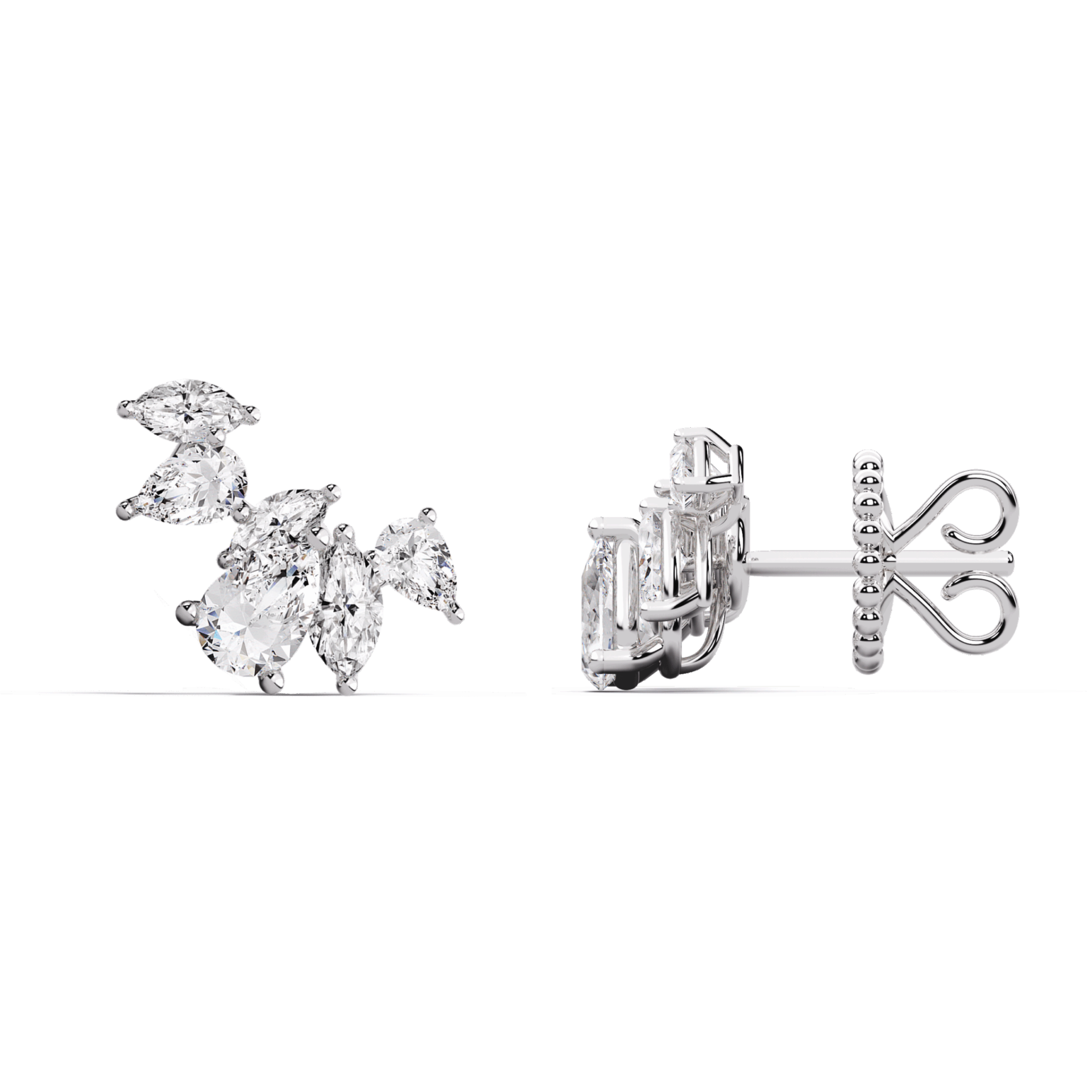
Forward-looking practice pairs proportion data with design controls. Workshops now use structured-light 3D scans to map facet symmetry and girdle variance, then simulate ray paths with tools akin to ASET-style analysis to flag leakage before the stone hits a bench. Parametric CAD locks crown height, pavilion angle, and chevron alignment, so the bow-tie narrows without forcing a clumsy table. Finite element checks on the tip region help position V-prongs and shoulder supports to absorb impact—small moves, major gains. Set side by side, a marquise tuned for 60–66% depth and a balanced table often outperforms a shallow “spready” stone under mixed lighting. Add a low-profile basket, and real-world durability improves. If you prefer a modern edge, integrate the look within chic diamond jewelry that uses protective halos and contoured galleries—form meets function.
This comparative lens clarifies choices. Old method: chase face-up size, accept a darker core and fragile tips. New method: secure medium-to-slightly-thick girdle at the points, align pavilion mains, and dial crown height to keep fire. The result reads clean to the eye and stable in daily wear (gym, desk, commute). You keep the graceful silhouette while reducing the most common service calls. To close with practical guidance, consider three evaluation metrics when selecting a marquise or its setting: 1) Light performance: look for minimal leakage under an ASET-style view and a restrained bow-tie under ambient LEDs; 2) Durability controls: V-prongs or shield tips with correct seat geometry, and a girdle that is not Very Thin at the points; 3) Proportion targets: length-to-width around 1.85–2.10, depth within 60–66%, and a table that does not crush crown fire (roughly mid-50s to low-60s). These benchmarks help translate specs into daily comfort. For deeper, standards-based selection and thoughtful design alignment, see Vivre Brilliance.