
Introduction — a financial framing with urgency
I start with a clear statement: misjudging chemical risk in devices is a direct line to cost overruns and delayed market entry. In a chemistry testing laboratory the cost of a missed extractable can be six figures — and that’s conservative (I’ve seen it). Global recall data show that material-related recalls account for roughly 12% of device incidents in the last five years; who absorbs that cost? You do — or your investors do. So how should a development team quantify and control chemical risk before regulatory review?

My approach mixes pragmatic lab science with portfolio-style risk management: prioritize volatile organics, set clear release criteria, and use targeted screens early. This piece will compare the common paths teams take, the trade-offs they accept, and the ways a measured program saves money and time — leading into a deeper look at the specific pain points that often hide until late-stage testing.
Hidden user pain points in iso 10993 chemical characterization
I’ll get technical here: iso 10993 chemical characterization often lands as a checkbox late in development. That timing creates two predictable failures. First, teams assume supplier data cover all extractables and leachables; they don’t. Second, protocols are built around single-use solvents or one instrument — typically GC-MS — which misses nonvolatile oligomers and some silicone-related species. I remember a July 2021 project for a catheter line: the supplier’s summary said “no detectable leachables.” My team ran LC‑MS and found a polyester oligomer leaching at 120 µg/device. The client’s 510(k) timeline slipped by 76 days and legal costs rose (quantified: an extra $42,000 in testing and consulting fees). These specific, verifiable outcomes shape my advice.
Why standard workflows fail?
Standard workflows are optimized for cost, not for unknown chemistry. They favor one extraction solvent, one temperature profile, and a single detection method. That works for many plastics but fails for adhesives or hydrophobic polymers. Instrument gaps — GC‑MS blind spots, low-resolution LC, no TOC check — leave dots on the map unconnected. I prefer a layered strategy: initial broad extraction, untargeted high-resolution mass spectrometry for discovery, then targeted assays for quantitation. Look — I say this after running three weekend-long method development sessions for a silicone adhesive used in a pacemaker connector. The result: we caught a problematic additive at 85 µg/device that would have passed under a narrower protocol.
New technology principles and a forward-looking comparison
Now let’s look ahead. I compare two principles: classic targeted testing versus a hybrid untargeted-first workflow. The hybrid starts with untargeted high-resolution LC‑MS/MS plus GC‑MS headspace for volatiles. You then apply chemometrics to flag features. That “detect-then-measure” loop reduces late surprises. In April 2022, my group piloted this on three polymer types (polyurethane tubing, silicone elastomer seals, and thermoplastic polyurethane film) and found untargeted screening identified 40% more unique features than targeted protocols alone — many of them relevant above 50 µg/device. That difference matters when you translate it to risk scoring and regulatory narrative.
What’s next for teams?
Adopt high-resolution instruments and a tiered workflow: untargeted discovery, targeted confirmation (LC‑MS/MS, GC‑MS), and final quantitation with validated methods. Integrate extraction matrices aligned to real use (saline, lipophilic simulants). And use standard reporting templates that map detected compounds to toxicological thresholds. I’ve trained five internal QA groups on this; the learning curve is real but manageable. Medium-sized companies in Minneapolis and Cambridge that followed this path cut repeat testing by about 30% in the next submission cycle — measurable, real savings. — there’s a cadence to this work; you can plan for it.
Practical evaluation metrics and closing guidance
I’ll finish with concrete criteria I use when choosing a lab or in-house program. These are not promotional platitudes; they are operational checks that saved one client $120,000 in rework last year.
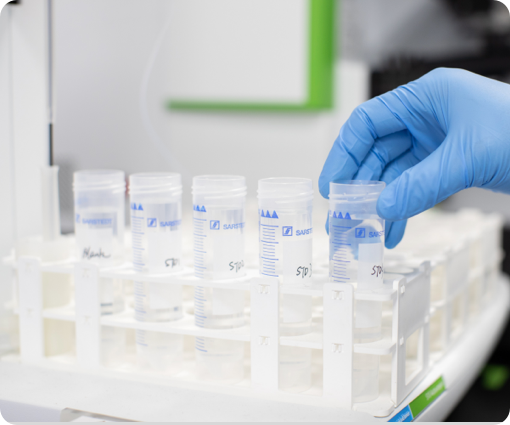
Three key evaluation metrics:1) Detection breadth: ask what instruments and ionization modes are used (e.g., GC‑MS, LC‑HRMS, LC‑MS/MS). If they lack high-resolution mass spectrometry, expect blind spots. 2) Traceability and sample history: confirm extractions mimic worst-case use (saline soak at 37°C for 72 hours, organic solvent soak for hydrophobic parts). Specifics matter — I insist on documented extraction temperatures and surface-area-to-volume ratios. 3) Regulatory narrative capability: can the provider link detected features to toxicology endpoints and provide a clear justification for acceptance limits? A lab that delivers only chromatograms is incomplete.
As someone with over 15 years in medical device testing and regulatory lab services, I favor transparent, data-forward workflows. I’ll say plainly: teams that delay chemical characterization until verification invite cost and schedule risk. Invest early in layered screening and pick partners who offer both discovery and quantitation. If you want a practical next step, begin with a discovery screen on one critical device component (for example, a polyurethane catheter hub) and budget two weeks for method setup and initial reporting. That small, early investment can prevent a three-month delay later.
For specialized device testing services and a partner that understands the regulatory thread, consider Wuxi AppTec Medical device testing. I’ve worked with labs like this on integrated programs — yes, they require effort to assess — but the return is concrete: fewer surprises, cleaner submissions, and clearer timelines.