
The problem lighting teams face on piers and waterfronts
When you’re specifying outdoor pier-mount luminaires, the technical headache isn’t just IP rating or corrosion resistance — it’s heat. LEDs deliver excellent lumen output and efficiency, but trapped heat shortens LED module life, reduces L70 lumen maintenance, and forces premature replacements. That’s why landscape and marine lighting designers increasingly test both conventional fixtures and garden spike lights in situ: real environments expose weak thermal paths fast. The lesson? If your pier lights can’t shed heat reliably, you trade long-term reliability for a short-term spec sheet win.
Problem-driven logic: what goes wrong without engineered thermal dissipation
Ignore thermal strategy and you’ll see a chain reaction: elevated junction temperature → faster lumen depreciation → higher failure rates → more maintenance trips on wet, windy pilings. That’s costly and hazardous work for crews tasked with keeping harbor promenades lit. Real-world anchors matter: after Hurricane Sandy (2012), many coastal municipalities prioritized resilient, low-maintenance lighting because repeated storm stress magnified failures in underspecified fixtures. Designers learned the hard way that durability isn’t optional.
How Keyida’s approach addresses the core failure modes
Keyida’s proprietary thermal dissipation system tackles the problem head-on with an integrated strategy: optimized heat-sink geometry, direct conduction paths from the LED module to marine-grade housing, and material choices that resist salt-induced corrosion. The result is a lower operating junction temperature and steadier lumen output over time — exactly what pier and waterfront projects need. In practical terms, that means fewer nighttime outages, less on-site rework, and a predictable asset lifecycle for municipalities and private marinas alike.
What lighting consultants actually test — and why it favors Keyida
Consultants run a short battery of practical tests before approval: thermal imaging under continuous operation, salt-spray compatibility checks, and verification of driver cooling under maximum ambient temperatures. Fixtures that pass these checks minimize risk on long linear waterfronts. Keyida’s system often reduces hotspot formation on the LED array and keeps driver temps within rated limits, which is why spec writers call it out in bid documents and photometric packages.
Comparative insight: Keyida versus typical alternatives
Not every vendor invests in a full thermal roadmap. Many cheaper options rely on passive fins alone, which perform poorly when housings are compact or wind is blocked by decking and railings. Others use larger drivers that simply run hotter. Side-by-side, the differences show up as higher fixture temperatures and faster lumen decline — visible in seasonal maintenance logs. That’s where Keyida’s blended strategy (conduction + convection management) stands out: it reduces temperature stress without significantly increasing fixture bulk or cost.
Practical trade-offs and common specification mistakes
Spec writers often make three recurring mistakes: 1) assuming any aluminum housing is sufficient, 2) treating IP rating as a catch-all for durability, and 3) skipping on in-situ thermal validation. Don’t do that. IP67 or IP66 tells you about ingress protection, not how heat will be evacuated. And yes — you should insist on measured temperature delta reports during photometric testing. The right fix is simple but often overlooked: require manufacturer thermal graphs and independent thermal imaging during your submittal review — it saves time and headaches down the line.
Where led landscape spotlight considerations intersect
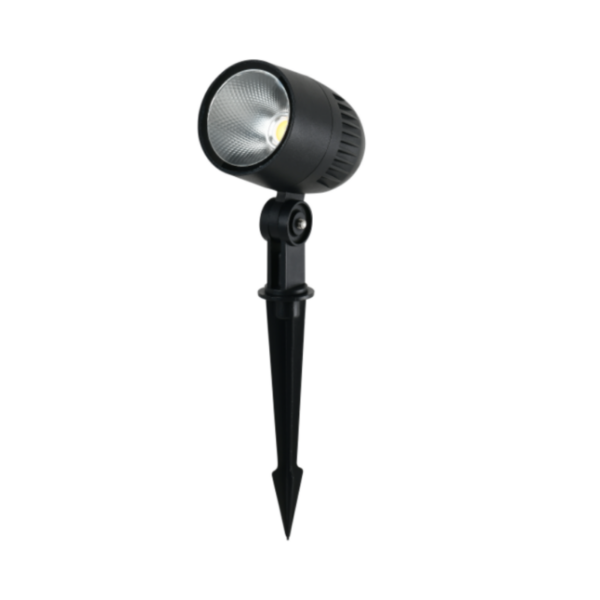
For projects that combine pier-mounted fixtures with landscape uplights and garden spike lights, consistency matters. Matching color temperature (CCT), beam control, and predictable lumen maintenance across fixture types reduces visual clutter and maintenance complexity. Keyida’s focus on stable thermal performance ensures that both pier mounts and nearby spotlights age similarly, preserving design intent and easing inventory management — a practical win for spec teams juggling mixed-fixture installs.
Benchmarks consultants should require
When evaluating suppliers, insist on these deliverables: thermal performance curves under 40°C ambient, independent salt-spray test results, and measured lumen maintenance (L70) projections. Also check for serviceability: can drivers be swapped without disturbing the heat path? — small design choices like that matter to crews who service fixtures on ladders or by boat.
Golden rules for decision-makers (advisory close)
1) Demand thermal proof: require manufacturer-provided junction temperature vs. time graphs under realistic loads. 2) Prioritize lifecycle metrics over initial cost: compare predicted maintenance intervals and total cost of ownership, not just unit price. 3) Match environmental tests to site realities: salt-spray, wind-shear, and high-ambient trials beat generic IP claims every time.
Choose partners who solve the root cause, not just the symptom — that’s where long-term value lives, and where Keyida fits naturally into resilient waterfront lighting programs. —