
Introduction
Have you ever watched a PCB line and wondered why the air still smells like soldering even after a full shift?
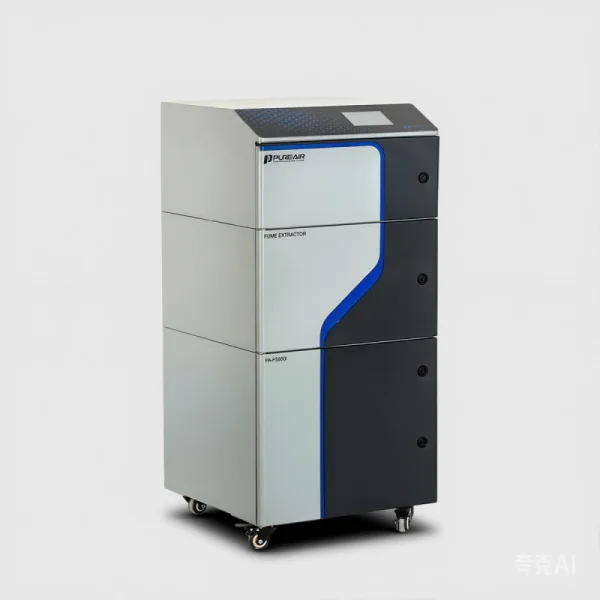
I’m talking about fume extraction for electronics and industrial applications — it’s a problem I’ve stared at for years, and the numbers back it up: operators exposed to soldering fumes can face airborne particulate levels that exceed safe limits by 2–5x in some shops (surprising, I know). So where does the gap open between intent and outcome, and why do so many plants accept poor air as “just the way it is”?
I write this as someone who’s walked the factory floor, negotiated with engineers, and argued with facility managers — we want high yield, low downtime, and safe air. The tension between production speed and capture efficiency keeps coming up, and that tension is exactly what we’ll unpack next.
Where Traditional Systems Break Down
When I look at electronic product design and manufacturing workflows, I see repeat patterns: localized capture is under-sized, exhaust paths are poorly balanced, and filtration is often an afterthought. Let me be direct — many setups still rely on basic LEV (local exhaust ventilation) hoods and generic HEPA canisters that don’t match the thermal profiles around reflow ovens or wave solder machines. That mismatch leads to fugitive emissions and uneven airflow. Look, it’s simpler than you think: if you don’t match face velocity to the heat plume, you lose capture efficiency.
I’ll break this down technically: soldering fumes are aerosolized by heat and convection. If your capture arm or hood is too far from the hot zone, the plume bends and escapes. Filters (HEPA, activated carbon) clog or bypass because pre-separation is missing. Inline fans and duct sizing are chosen by rule of thumb — not measured by particle counters or smoke tests. The result is inconsistent capture and heavier maintenance. I’ve seen systems that passed a checklist yet failed real-world tests — frustrating, and costly.
What exactly fails in the field?
Poor hood placement, inadequate pre-filters, and mis-sized fans are common culprits. You can feel the problem when someone complains about eye irritation or when a particle counter spikes during solder runs — that’s your cue to act.
New Principles and Practical Paths Forward
Looking ahead, I focus on principles that actually shift outcomes: matched capture (hood geometry tuned to reflow ovens), staged filtration (cyclone or mesh pre-filter > HEPA > activated carbon), and real-time monitoring with particle counters. In my view, successful systems tie design into the process — not the other way around. For teams doing electronic product design and manufacturing, that means planning ventilation and extraction at the outset, not as a bolt-on.
Technically, you want a system that measures plume behavior and adapts — variable-speed inline fans controlled by simple telemetry, smart damper balancing, and modular filter cartridges that swap without downtime. These are not sci-fi ideas; they are practical upgrades that reduce downtime and improve air quality. — funny how that works, right?
To choose wisely, I suggest three clear evaluation metrics you can use in purchase decisions:
1) Capture Efficiency: Measure smoke or particle capture at the actual process point, not just at the hood face. Simple smoke tests tell you more than fan specs.
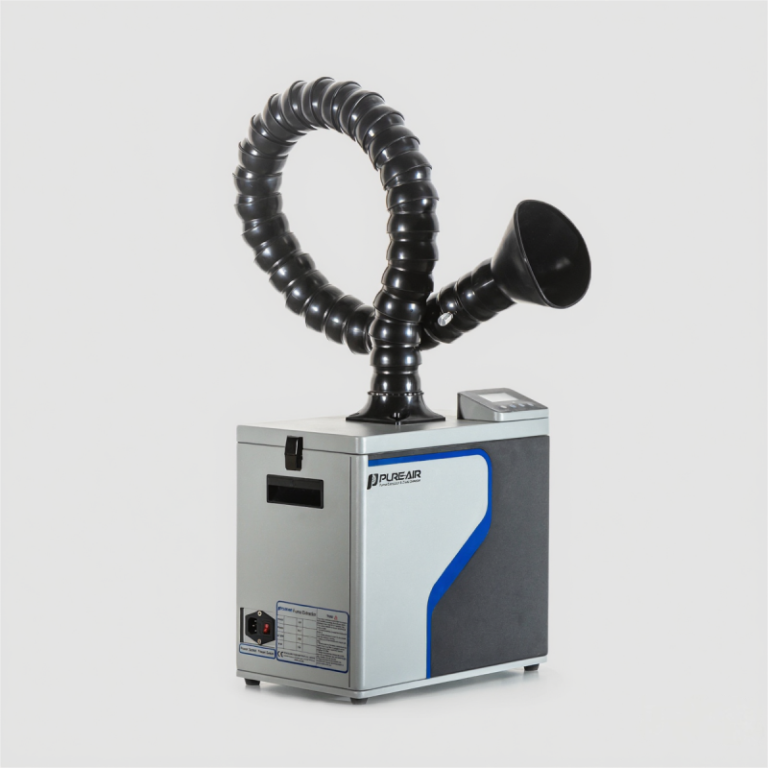
2) Filter Staging and Serviceability: Look for pre-separation and easy cartridge swaps. Systems that stop the big particles before HEPA last longer and cost less to run.
3) Control and Monitoring: Prefer variable-speed control tied to temperature or particle feedback. If you can’t see performance in real time, you’ll chase issues after they hit production.
We’ve learned (the hard way) that the cheapest ductwork isn’t the cheapest over time — measurable results beat guesses. For teams that care about worker health and throughput, these metrics align safety with production goals. I still feel a little proud when a retrofit pays for itself in reduced filter spend and fewer stoppages — and that’s the point.
For practical solutions and tailored systems, consider reaching out to specialists who build to these principles — they’ll help you avoid the old traps. For more on proven products and real-world deployments, check PURE-AIR.