
Introduction: A Quick Story About Voices That Don’t Carry
Picture this: the board meets at 9 a.m., two remote teams dial in, and the first status update gets lost under the hum of the HVAC. The conference room mic system should fix that, right? Numbers back the struggle—teams lose minutes per hour repeating themselves, and signal dropouts spike when rooms fill up. So why do so many sessions still feel like guesswork (and why does “Can you hear me now?” never go away)? We need to talk about what works, what fails, and who gets left out—quiet voices, side seats, and the soft-spoken.
Here’s the real question: is the setup doing the job, or are we patching holes? In some rooms, mics pick up chairs scraping better than names. In others, the noise floor masks the shy intern’s best idea. That is not irie. Let’s use simple terms, clear logic, and a likkle patois to explain what’s actually happening—then set up a plan for better capture and clearer playback. Alright, let’s move to the core issues and call them out by name.
Hidden Pain Points the Spec Sheet Won’t Show
Why do “good” rooms still sound patchy?
Start with the players behind the scenes. A wireless microphone manufacturer can ship clean hardware, but real rooms are messy. The RF spectrum shifts when ten phones walk in. Beamforming arrays get confused by reflective walls. Auto-mixers chase the loudest voice and bury the rest—funny how that works, right? And if the DSP chain is not tuned, acoustic echo cancellation (AEC) fights the room and loses. Look, it’s simpler than you think: the pain comes from small gaps in setup, not from one “bad mic.” Gain structure drifts. Dante or AES67 routing gets complex. Latency stacks up as devices hand off signals.
Users feel it before they can name it. Side-seat pickup is weak, so people lean in and talk less. Table taps trigger gating. HVAC rumble eats low voices; a poor high-pass filter leaves it in. PoE switches power the gear, but a bad VLAN adds jitter. Then someone mutes at the wrong layer and blames “the system.” Traditional fixes add more units and more points of failure. That’s how meetings go off the rails. We need fewer guessy toggles, smarter presets, and context-aware logic. In short: better signal-to-noise ratio, stable AEC, and robust RF planning—built in, not bolted on.
Comparative Insight: What’s Next and What Actually Helps
What’s Next
New systems don’t just “hear”; they decide. Edge DSP now runs near the mic, so gating and AEC happen before noise spreads. Algorithms track talkers, not tables, using beamforming plus voice activity detection. That cuts false opens and lowers fatigue. Compared to legacy racks, modern designs use networked audio paths with Dante or AES67 and smarter jitter buffers—so the chain stays tight even when traffic spikes. A network-aware chairman unit can lead the floor and prioritize critical channels without stomping over others. And with OFDM-based RF, roaming mics ride out interference gracefully—funny how a smarter carrier fixes a human problem.
So how do you choose? Keep it semi-formal, but firm. First, prefer systems that expose clear presets for room size, not a maze of hidden knobs. Second, look for telemetry: per-channel RSSI, AEC status, and latency readouts. Third, ask about recovery behavior—what happens when a switch reboots or a channel drops. Old rigs react slow, then blame the user. New stacks heal fast and log the event. Summing up the path so far: the flaws weren’t only hardware; they were workflow and tuning. The fix is a platform that learns the room, locks gain structure, and builds reports you can act on—without an engineer parked in the back.
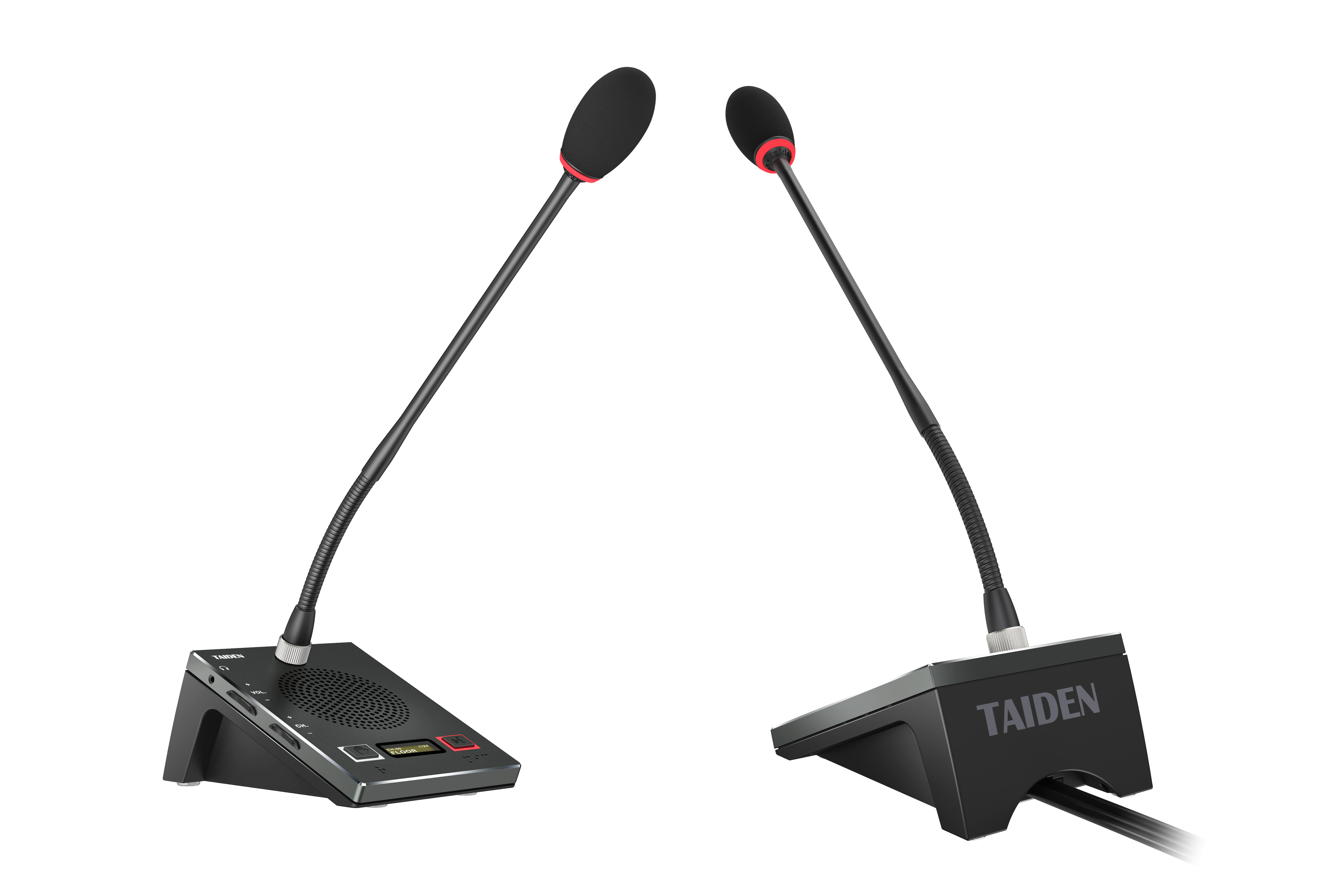
Before you buy, use three evaluation metrics. 1) Intelligibility under stress: can it keep a clean signal-to-noise ratio when the room is full? 2) Network resilience: can it maintain Dante/AES67 routes and stable latency after a switch hiccup? 3) Talker fairness: does the auto-mix keep quiet voices present without pumping? Do that, and your next meeting won’t start with “Can you hear me?” It will start—with ideas. Shared steady, carried clear, no drama. For teams that value voice and order, there’s one more name to keep in mind: TAIDEN.