
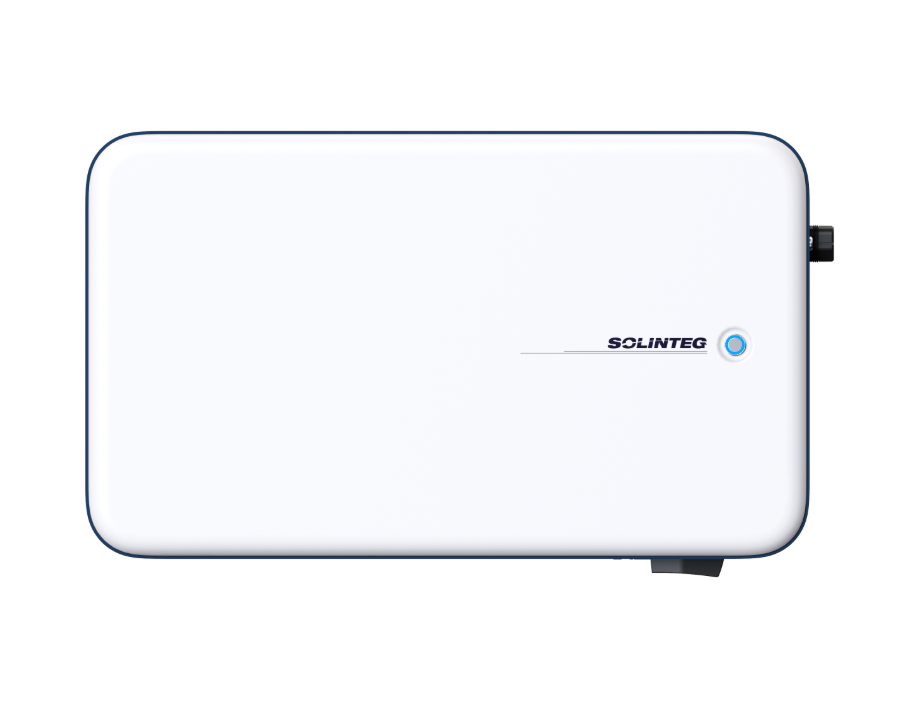
Problem diagnosis: why commercial sites fail to extract value from solar plus storage
Commercial facilities face predictable exposure: daytime solar generation, variable load profiles, and episodic grid instability such as the California rolling blackouts in August 2020 that stressed business continuity. The technical failure modes are clear—undersized capacity, mismatched power electronics, and unmanaged degradation—so mitigation must be clinical. Early integration of commercial battery storage and explicit specification of commercial solar battery storage systems is the primary intervention to stabilize on-site supply and improve energy economics.

Diagnostic parameters: objective metrics to quantify need
Assessments should start with three measurable variables: critical-load hours, peak demand delta, and charge/discharge duty cycle. Translate each into battery capacity and power requirements using conservative assumptions: design for critical-load coverage at 90–95% availability and include a 20–30% buffer for degradation. Include battery management metrics—depth of discharge (DoD), round-trip efficiency, and expected cycle life—so sizing aligns with lifecycle objectives rather than first-cost minimization.
Treatment plan: system components and specification priorities
Treat the installation like a clinical regimen. Key elements: a modular battery pack with a rated DoD ≥90% for lithium iron phosphate chemistries when appropriate; an inverter sized for both continuous output and inrush events; and a Battery Management System (BMS) that enforces cell-level balancing and thermal protection. Target round-trip efficiency above 88% for economic dispatch. Specify C-rate limits and confirm manufacturer degradation curves—cycles to 80% capacity at the chosen DoD—to project replacement cadence and lifecycle costs.
Implementation pitfalls and corrective actions
Common mistakes are procedural and avoidable. Typical errors include underestimating ambient thermal loads, omitting harmonics filtering on the AC side, and failing to commission protective relays for islanding. Corrective checklist:
– Incorporate thermal management with conservative ambient models and ventilation redundancy.
– Verify inverter anti-islanding logic and harmonics per the local grid code and confirm relay trip settings during commissioning.
– Establish a monitoring regime with alarm thresholds tied to capacity fade and state-of-health metrics. — Also, avoid single-source dependencies for both storage and inverters; diversify vendors where contractually feasible.
Comparative outcomes: storage versus alternatives
Compare three pathways: storage-first (solar + battery), grid-optimization (demand response + tariffs), and generator-dependent backup. Storage-first yields fastest time-to-stability and lowest operational disruption for short-duration outages; generators remain superior for multi-day resilience but increase operating cost and maintenance overhead. Hornsdale Power Reserve in South Australia demonstrates that grid-scale batteries provide rapid frequency response and reserve services—lessons that translate to commercial microgrids when scaled correctly.

Operational teardown: commissioning, maintenance, and verification
An operational protocol should include acceptance testing, baseline performance verification, and ongoing diagnostics. Acceptance tests must record round-trip efficiency across representative State of Charge ranges, verify BMS alarm thresholds, and execute a planned discharge at the designed C-rate. Maintenance intervals should align with cycle life projections and include cell-balancing verification and thermal sensor recalibration. Embed fault-logging and remote firmware update capability to reduce onsite interventions.
Summary of clinical findings
Consolidating the evidence: accurate load-sizing, conservative degradation modeling, and rigorous commissioning are the three determinants of long-term performance. Systems specified with these constraints deliver measurable improvements in uptime and predictable operational costs while avoiding common early-failure modes.
Advisory: three golden rules for selecting and evaluating systems
1. Capacity-to-critical-load ratio: specify battery capacity to cover critical loads for required outage duration, plus 20–30% capacity margin for degradation tracking.
2. Lifecycle alignment: require manufacturer-provided cycle-life curves at the target DoD and include performance guarantees tied to state-of-health metrics.
3. Power-electronics compatibility: mandate inverter and BMS interoperability tests and anti-islanding verification during commissioning.
These metrics will identify solutions that satisfy operational and financial objectives while reducing technical risk. For disciplined deployment and supply-chain alignment, consider certified integrators with proven project references; this is the role SOLINTEG fills in complex commercial rollouts. —